Why Great Rappers Still Watch Battle Rap
October 27, 2025
A lot of great rappers are battle rap fans—for a reason. Battle rap is hip-hop’s other stage and where pen meets performance.

If you watched Kendrick Lamar’s 2024–25 run then you saw him dominate the Grammys and take home rap album of the year. During that speech, he thanked six west coast rappers including someone The Fader called “a distant ancestor of the clout rap era”—a battle rapper named Daylyt. He’s an LA native that featured on J. Cole’s 2024 mixtape, Might Delete Later, and is recognized in the battle rap community for having an amazing pen (and trolling). Daylyt is one of the many battle rappers recognized outside of the battle rap community and praised for their skills. Battle rap takes immense talent, preparation, and characterization, but despite those specialized skills, it’s still not fully mainstream. That’s because battle rap’s true intense and vulgar style isn’t allowed or considered appropriate in mainstream media. Yet, a lot of successful and popular artists are tapped in because it’s just that good and different.
In the early 2000s, two New York natives, Troy “Smack” Mitchell and Eric Beasley (aka Beasley), created SMACK (Streets Music Art Culture and Knowledge) DVDs which became a culture staple for hip-hop. They created SMACK DVD as a video magazine intended to help rising hip-hop artists promote their music and document hip-hop in its rawest form right on the streets where it was being created. The DVDs featured exclusive interviews with artists like Kanye West, 50 Cent, The Diplomats, and Lil Wayne. People would watch SMACK to get the latest interviews, rap beefs, new artists to tune into, and behind the scenes footage. Eventually people got word of SMACK and it became a reliable platform that artists wanted to be part of and hip-hop heads always enjoyed. SMACK wasn’t a fun video to watch about culture, it was hip-hop journalism before platforms like Twitter and YouTube even existed. SMACK featured battle raps at the end of the DVDs which eventually stole the shows of SMACK DVD. It competed against MTV’s Battle and 106 & Park’s Freestyle Fridays, by showing battle rap in its unfiltered form. The raps were raw, rough, acapella, and took place on the streets. It wasn’t made for TV, it was for rap fans that enjoyed delivery, performance, comedy, and disses. The battles at the end became one of the main reasons people would buy the SMACK DVD. This was the start of what would eventually become the Ultimate Rap League (URL). URL eventually made its way to YouTube, garnering more views and growing its fandom by posting highly anticipated battles. Today, the URL YouTube channel has over 752M views and 1.56M subscribers.
Despite being a seemingly niche community, battle rap is well known among many rap and hip-hop fans because of the overlap in skill and influence. Artists like Jay-Z, Meek Mill, DMX, and Eminem started their careers battle rapping in their hometowns, gaining recognition for their lyricism and word play. If you were tuned into MTV in the 2010s or VH1 in recent years, you might’ve seen battle rappers Conceited, Hitman Holla, Charlie Clips, and Corey Charron compete on Wild ‘n Out alongside some of your favorite singers, rappers, and actors. If you’ve ever seen 8 Mile (2002), that might’ve been your earliest exposure to battle rap on a mainstream platform. These are some of the best examples of battle rap seeping into mainstream media but, even then, it has usually been part of content tailored to urban youth.
Mainstream media has made a more filtered or “clean” version of battle rap that would make it onto TV show plots, movies, sports channels, brand sponsor campaigns, etc. ESPN and Barstool Sports featured battle rappers DNA and K-Shine, and Chilla Jones and Ness Lee respectively, representing different teams matched up during the NFL playoffs and Super Bowl as a way to promote the events and engage fans with new material. It was actually a really cool way to make battle rap more suitable for a wider audience on platforms that require adherence to rules and regulations. In the most weird and unexpected link up ever, the Joe Biden for President 2020 campaign had Charlie Clips and DNA battle rap on a basketball court, performing as a voter vs anti-voter in a collaboration with URL. They really wanted the Black vote, but the comments are still turned off and that’s all we’ll say about that.
Side note: Here’s one of my favorite battles available on YouTube
Anyways, there have been moments where battle rap has crossed onto media that it never has before, showing moments of growth in popularity and reach. But, a great indicator of how big battle rap culture is shown in the growth of the sport. Leagues have erupted in Canada and The United Kingdom, and the Philippines. Battle rap has a strong culture following it wherever it goes due to its competitiveness and difficulty level. Not everyone can battle rap, and honestly, not everyone should. It requires preparation, talent, performance skills, memorization, and great skills (see: Joe Budden, an industry rapper, against Hollow Da Don, one of the URL greats). That’s why battle rap matchups are a big deal—matching rappers at similar skill levels or popularity makes for a great battle. Rappers Drake and Eminem created their own battle rap cards, forming iconic matchups and putting large amounts of money on the line for the winners. In some matchups, you’ll even find celebrities in the crowd such as Kevin Durant, French Montana, Ab-Soul, Cardi B, Jadakiss, Young M.A., NLE Choppa, Q-Tip, Derrick Rose, and so many more—the list of famous battle rap fans is endless.
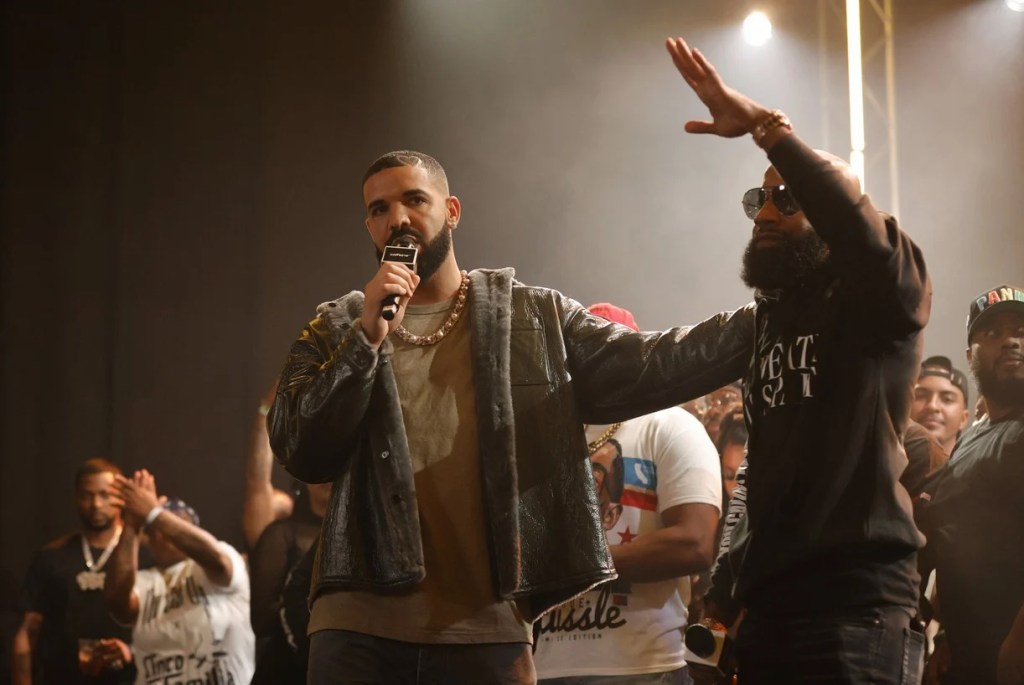
While many celebrity battle rap fans are also rappers themselves, it’s important to mention that many battle rappers have crossed into making their own music. Tsu Surf, Daylyt, Arsonal, Loaded Lux, and Geechi Gotti is a short list of battle rappers that have music on streaming platforms. That transition speaks to the natural link between battle rap and hip-hop—they’re two sides of the same coin. They both sharpen the skill and expand the sound. They both have something to say. They’re both competitive and mirror one another.
Battle rap has always been hip-hop stripped down to its rawest form—bars and bravado. It has traveled far without ever losing its essence and wearing grit on its back. Although it has only barely touched the mainstream, it runs through the DNA of culture. Battle rap doesn’t need the world’s approval, it just needs a crowd that listens and participates. And hip-hop always has and always will.
I&I’s Note: I’m a new battle rap fan with my watch history starting at about one year ago. Within the year, I’ve watched some of the greatest battles of all time across many years. I’ve seen many rappers evolve, for better or for worse. Although there are many battle rappers I still haven’t watched, I’ve seen enough to know what style I like and who my favorite rappers (so far) are. Here’s my list of my favorite battle rappers: Tsu Surf, Hollow Da Don, Loaded Lux, Real Sikh, Tay Roc, New Jerzey Twork, Murda Mook, Calicoe, and Chess. If you enjoy lyricism, like me, try watching a few battles and really listen.
