Nostalgia is Killing Your Ability
to Listen To Good Music
February 26, 2026
Between Gen-Z’s obsession with Y2K and older hip-hop heads’ constant critique of contemporary hip-hop and rap culture, people are deeply attached to the past and the music that came with it. Music genres—specifically hip-hop and R&B—often move in wave-like eras where artists use similar blends of sounds. For example, neo-soul, a combination of jazz, soul, funk, hip-hop, and punk dominated the R&B category in the 1980s and 1990s. Other examples include trap, drill, and alternative R&B— genres of music that came in waves, had peaks, and still live on today.
Contemporary music builds on older music, which is why so many artists use samples. Today, you’ll find artists and producers sampling instrumentals and beat patterns made popular in the 2010s and early 2000s. Early 2000s artists borrowed sounds from the ‘90s, just as ‘90s artists used music from the ‘80s and ‘70s, and so on. The point is that music is meant to be built upon. It provides context for the time in which the artist exists and helps tell the story they’re portraying.
Imagine this: You spend a few years building your fanbase and creating your sound in a specific lane. Three years in, you begin gaining more fans after stepping outside that lane through shorter projects—singles or a 10-song album. Everyone loves this sound, so you release a longer project full of this sound that gains mainstream success. Later, you drop an album that feels more commercial, but still rooted in the genre that shaped you. Although the mainstream and your core fanbase like the project, some listeners feel detached because it diverges from your original sound—or, ironically, it sounds too similar to what you’ve already made.
Then you spend three years crafting a new album—it blends well with the traditional category of your genre, working with producers you know people love. But you quickly realize the people want something closer to what you made almost 10 years ago. This is the story of Brent Faiyaz’s new album, ‘ICON’.
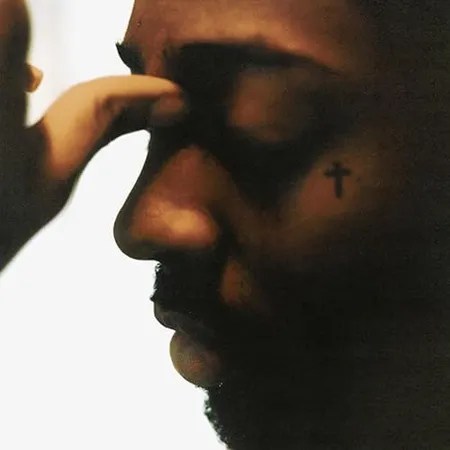
Cover photo for Brent Faiyaz’s third studio album, ‘ICON’.
‘ICON’ is executive produced by Raphael Saadiq, with additional production from Chad Hugo and Benny Blanco, and even features a Destiny’s Child sample. Those details alone excited people checking for Brent Faiyaz’s new album. However, the reception has been dicier than expected. On this project, Brent stretches himself creatively: he experiments with vocal range, uses more traditional R&B production, and abandons his usual unapologetic player-like persona in favor of dreamy, romantic lyricism. Sonically, he channels his inner Michael Jackson, positioning true romance as the album’s central message.
While some people are impressed at this switch, many wish they had old Brent back. They’re looking forthe Brent of ‘Sonder Son’, released nearly 10 years ago. Brent is just one example of an artist who evolves years after the project that made them popular, only to receive mixed reactions from fans craving the original sound.
Many are calling the new Brent boring, critiquing the lack of complex lyrics we’re used to hearing from him. Instead of the evil Casanova-style lines like, “It’s your fault for loving me/ You put your trust in me/ And I didn’t ask,” he now offers earnest confessions such as, “Maybe it’s a little bit rushed/ But, I’m falling in love…Girl, I know that it’s real/ It’s like you fell down from Heaven.” The shift reveals a softer perspective, but many listeners criticize the album for lacking the layered lyricism that once defined his appeal as an R&B artist. Those lyrics once felt so morally ambiguous that they were almost absurd, but their poetic edge kept audiences engaged and anticipating his next project.
Ultimately, the mixed reception reflects a broader tension artists face when evolving beyond the sound that made them popular: listeners often struggle to separate growth from expectation.
Artists aren’t the only ones that face this struggle, though. It’s a problem that R&B and hip-hop face as genres. Contemporary music builds on older music. Both Brent and R&B/hip-hop evolve, take risks, and produce sounds different from what was previously popular.
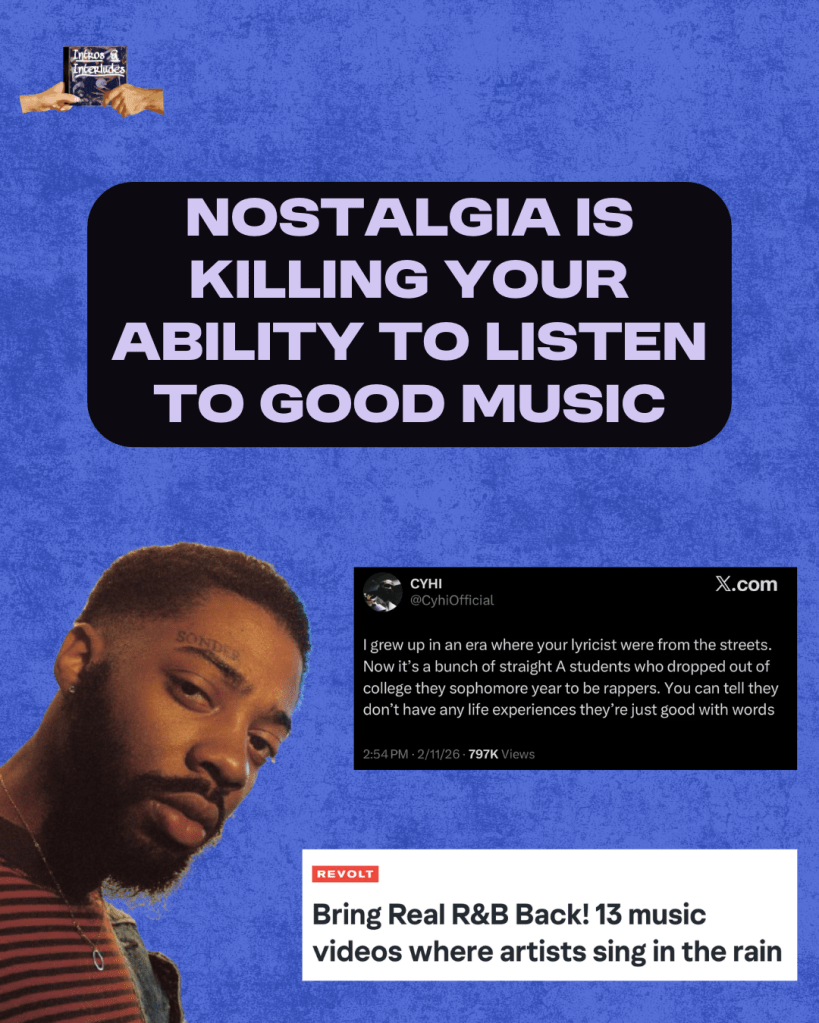
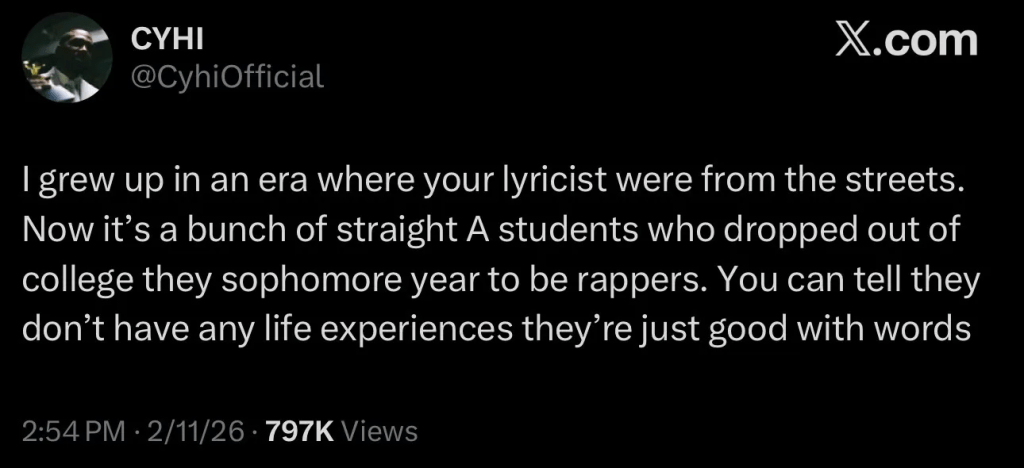
“I grew up in an era where your lyricist were from the streets” CyHi wrote. “Now it’s a bunch of straight A students who dropped out of college they sophomore year to be rappers. You can tell they don’t have any life experiences, they’re just good with words.”
When CyHi, a veteran rapper and hip-hop artist, tweeted last week that rap is boring because today’s popular rappers aren’t from the streets, it immediately highlighted the issues listeners are creating. While he’s wrong to suggest contemporary lyricists lack real-life experience, it’s fair to say some modern rappers didn’t rise from struggle. Still, the sentiment CyHi shared— “I grew up in an era where [blank] happened, and now [blank] is happening, so today’s [insert genre] just isn’t as good”—is a lazy, yet common, attitude.
It’s also contradictory. CyHi wrote raps for Kanye West and Travis Scott, two artists that dropped out of college to make music, and later admitted that he doesn’t want to search for lyrics all the time. But that contradiction isn’t the point here.
CyHi expressed something a lot of audiences who have lived through multiple waves of change in hip-hop and R&B feel: nostalgia. It’s an attachment to the past that can discredit the evolution of the genres. Music today has so much range— there is a different sound for everyone, and sometimes that means listening beyond the Billboard charts.
If you’re looking for the feeling you had when you were in middle school or navigating your early adulthood, you may need to revisit those projects that provoked those feelings instead of expecting today’s artists to recreate them. Because music is constantly changing, nostalgia can only stretch so far. You might hear traces of old music in new sounds—because contemporary music builds on what came before—but the exact version you crave may never exist again, and that’s okay.
It’s 2026 and the best part of change is growth. If you don’t grow with the music, you might find yourself never enjoying it again.
